
What a commercial plumbing inspection covers and how often you need one
By Sofia Tan · Updated 2026-07-01
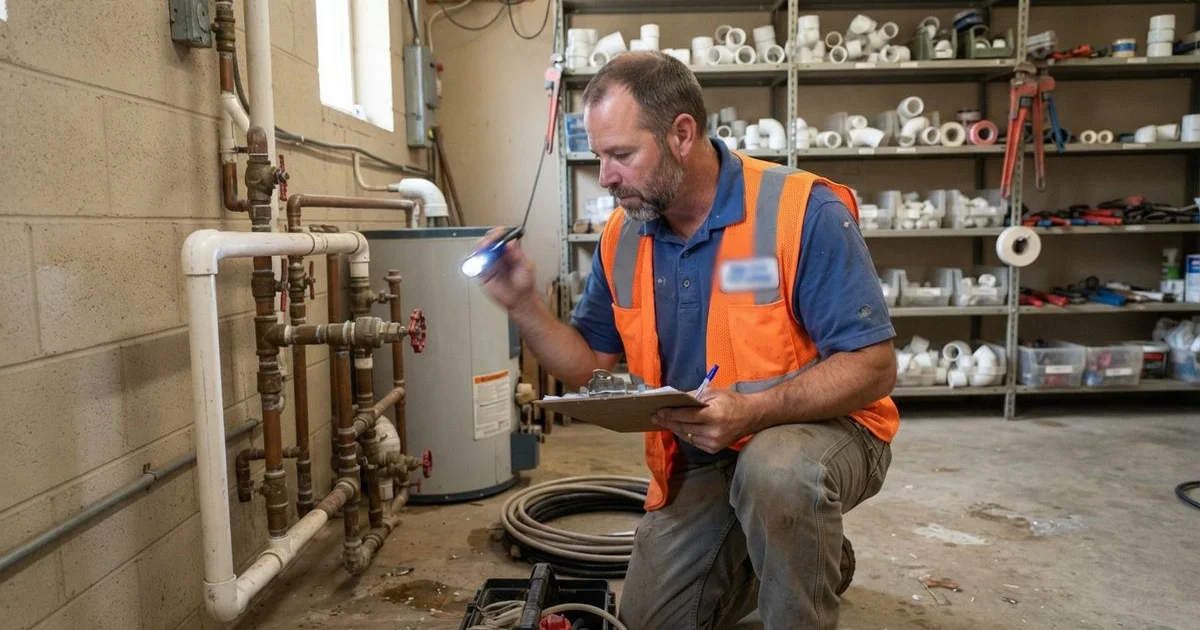
Commercial plumbing carries a different set of stakes than a home repair. A residential leak is an inconvenience. A commercial plumbing failure can mean a closed restaurant kitchen, a flooded retail floor, or a code violation that shows up during a routine inspection you didn’t know was coming.
What an inspection actually covers
A thorough commercial plumbing inspection looks past the obvious fixtures to the systems that keep a building compliant and functional day to day.
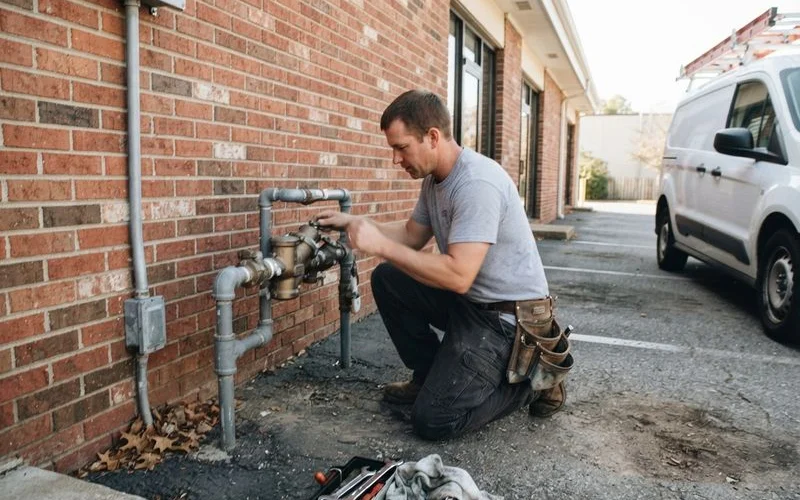
- Backflow prevention devices, which many municipalities require to be tested annually to protect the public water supply from contamination.
- Grease traps, for any business handling food service, since a neglected trap is both a code issue and a common cause of drain backups.
- Water heater and boiler systems, particularly in buildings with higher demand than a typical home, like a restaurant, gym, or multi-unit building.
- Main supply and drain lines, checking for the kind of gradual wear that doesn’t show symptoms until it becomes a shutdown.
- Fixture-level checks across every restroom, kitchen, or utility area, especially in buildings with multiple tenants where one unit’s problem can affect shared lines.
How often, and why the answer varies
| Property type | Reasonable inspection frequency | Why |
|---|---|---|
| Office or retail, no food service | Annually | Lower plumbing demand, but code items like backflow testing are still often required |
| Restaurant or food service | Every 6 months, plus routine grease trap service | Higher usage and specific code requirements around grease and grease traps |
| Multi-tenant or mixed-use building | Annually, with more frequent checks on shared main lines | Shared systems affect multiple businesses if something fails |
| Industrial or high-water-use facility | Case by case, often more frequent | Usage volume and equipment specifics vary widely |
Beyond a fixed schedule, any noticeable change, a slower drain, a water bill that jumps unexpectedly, or a tenant complaint about pressure, is worth a visit regardless of when the last inspection happened.
Why this differs from waiting for something to break
The reactive approach, calling only when something fails, tends to cost more in a commercial setting than residential, because the downside isn’t just a repair bill. A flooded retail floor or a shut-down kitchen has a real cost in lost business on top of the plumbing repair itself. An inspection that catches an aging valve or a slow leak before it fails is usually far cheaper than the emergency version of the same problem, and it avoids the operational disruption altogether.
Code compliance items, especially backflow testing, also carry their own risk independent of whether anything looks wrong. Many municipalities treat these as an annual requirement rather than an optional check, and missing one can mean a compliance notice even if the plumbing itself is functioning fine.
Getting the most out of the visit
An inspection is more useful if you come to it with context rather than just handing over the keys. Note any complaints you’ve gotten from tenants, employees, or customers, even minor ones like a restroom that smells faintly off or a sink that drains slower than it used to. Those small, easy-to-dismiss reports are often the earliest sign of something a plumber can catch before it turns into a shutdown.
It’s also worth asking for a written summary after the visit, not just a verbal “everything looks fine.” A short report noting what was checked, what’s aging but not yet a problem, and what to watch helps you plan budget for the next year rather than being surprised by a failure that a thorough inspection could have flagged months earlier.
Choosing who does the inspection
A commercial plumbing provider with real experience in your type of property, whether that’s food service, multi-tenant, or industrial, will know which code requirements actually apply to you rather than running a generic residential-style checklist. Ask specifically about their experience with your property type and whether they handle the backflow testing and documentation your building may need for compliance records.
Our scoring methodology explains how we weigh commercial experience and responsiveness across providers listed on the home page, which matters more here than in residential work, since a delayed response to a commercial issue tends to carry a bigger cost.
If a routine inspection turns up a clog needing more than a quick look, what to expect during a drain cleaning or sewer camera appointment walks through what that visit involves. And if backflow prevention devices are new to you, our glossary explains what they do and why code requires testing them.
Questions people ask
- How is a commercial plumbing inspection different from a residential one?
- Scale and code requirements are the main differences. Commercial buildings often have larger supply lines, grease traps for food service, backflow prevention devices required by code, and multiple fixture groups serving different tenants or departments, all of which need checking beyond a typical home visit.
- Do I need an inspection if nothing seems wrong?
- Yes, for two reasons: code compliance and prevention. Many commercial properties are required to have periodic backflow testing regardless of whether there's a visible problem, and catching a slow leak or aging fixture before it fails avoids business disruption.
- Who's responsible for plumbing maintenance in a leased commercial space?
- This depends entirely on the lease agreement. Some leases put plumbing maintenance on the landlord, others shift it to the tenant, especially for fixtures the tenant installed. Check your lease specifically rather than assuming either way.
- What's the most commonly missed issue in commercial inspections?
- Backflow preventer testing is one of the more commonly overlooked requirements, since it's often required annually by code but doesn't cause an obvious symptom until it fails, at which point it's a compliance issue as much as a plumbing one.