
A first-time homeowner's guide to your home's plumbing basics
By Sofia Tan · Updated 2026-06-15
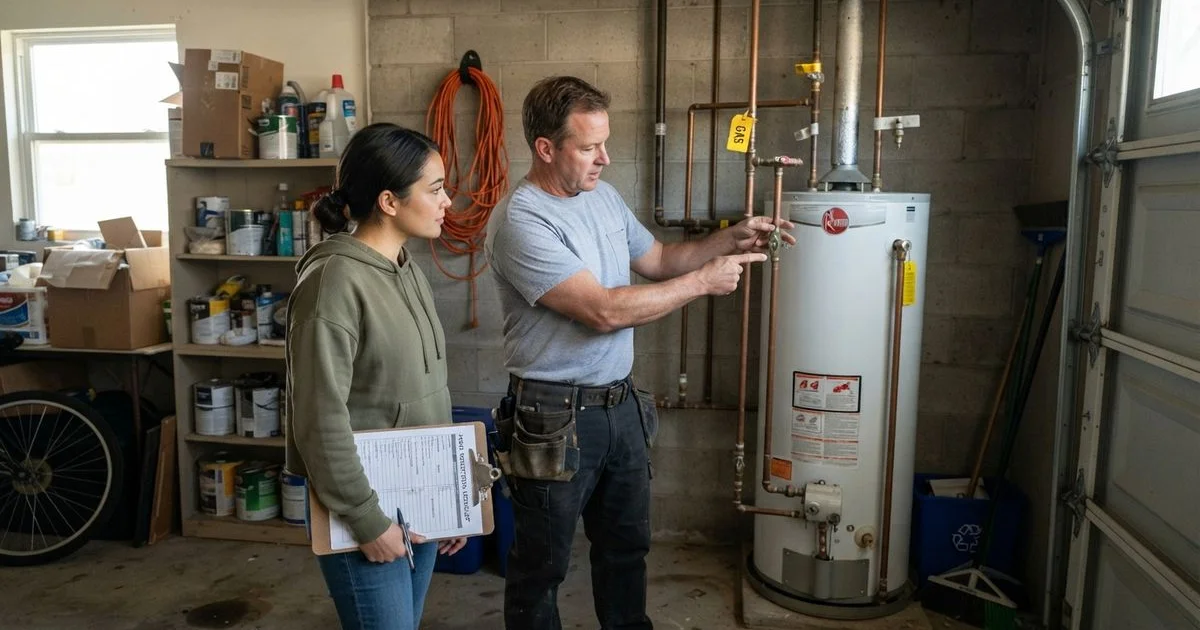
Nobody hands new homeowners a plumbing manual, and most people learn their home’s system the hard way, usually mid-leak. A little orientation up front saves a lot of stress later, and none of it requires becoming a plumber yourself.
Know your shutoffs before you need them
This is the single most useful thing to do in your first week. Every home has a main water shutoff valve, usually near the water meter, in a crawlspace, basement, or utility closet. Find it, and if it’s stiff or hard to turn, ask a plumber to service it rather than discovering that during an actual leak.
Beyond the main valve, most fixtures have their own local shutoff: the oval or lever handle under a sink, behind a toilet, or on the line to a washing machine. Knowing these exist means you can isolate a running toilet or a dripping supply line without shutting off water to the whole house.
Learn what’s normal for your specific home
Every house has its own baseline. A house built in the 1990s likely has copper or early PEX piping. Older homes, especially ones that haven’t been updated, may still have galvanized steel sections that corrode from the inside and eventually restrict flow or fail. If you don’t know your home’s plumbing age or material, it’s a fair question to ask during a home inspection or a first service call, and it shapes how urgently you should treat small warning signs.
A little bit of noise is also normal. A brief knock when a faucet shuts off quickly is common and rarely urgent. Slow drains that clear with a plunger happen occasionally in any home. What’s worth attention is a pattern: the same drain backing up repeatedly, a noise that’s constant rather than occasional, or a water bill that jumps with no obvious explanation.
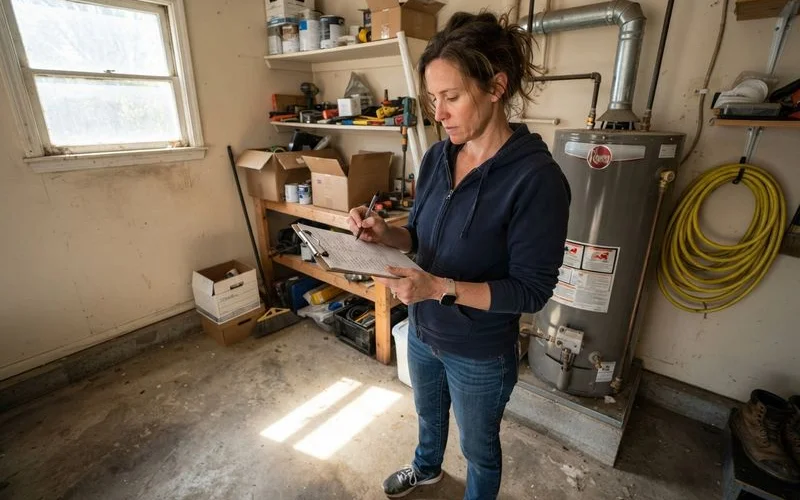
A basic starter checklist
| Area | What to check | Why it matters |
|---|---|---|
| Main shutoff valve | Locate it, confirm it turns | Your fastest response in any leak or burst pipe |
| Under sinks and behind toilets | Local shutoffs present and functional | Lets you isolate one fixture instead of the whole house |
| Water heater | Age, visible rust, and whether it’s leaking at the base | Most tank units last 8-12 years before replacement makes more sense than repair |
| Water pressure | Notice if it feels unusually high or low | High pressure stresses pipes and fixtures over time; low pressure can signal a hidden problem |
| Drains | Note which ones run slow, even slightly | A slow drain today is often a full clog in a few months |
A few habits worth building early
Write down or photograph your water heater’s manufacture date and model number soon after moving in, since you may not think to check until it’s already failing. The same goes for noting your home’s approximate age and, if you can find out, what the supply pipes are made of. None of this takes more than an afternoon, and it means you’re not starting from zero when you do eventually need a plumber.
It’s also worth testing your water pressure once, early on, just to know your baseline. A simple pressure gauge that screws onto an outdoor spigot costs little and gives you a number to compare against later if something feels off. Consistently high pressure, well above the range most fixtures are built for, is worth mentioning to a plumber even if nothing has failed yet, since it quietly stresses pipes and appliances over time.
When to call someone versus wait and watch
Most day-to-day plumbing doesn’t need a professional. A slow drain you can plunge, a running toilet you can silence by adjusting the flapper, or a dripping outdoor spigot in mild weather are all reasonable to handle yourself or leave for now. What’s worth a call sooner rather than later: any active leak, a water heater showing rust or pooling water at the base, a sewer smell anywhere in the house, or a drain that backs up in more than one place at once, since that pattern often points to a main line issue rather than a local clog.
Getting comfortable with a plumber before you have an emergency is worth the small effort. Read a few review summaries, note who responds quickly and explains their work clearly, and you’ll have someone to call rather than searching under pressure. Our scoring methodology explains how this directory evaluates local providers on responsiveness and workmanship, and you can browse the full list from the home page any time, not just when something’s already gone wrong.
If cost is what’s holding you back from calling, the guide on senior discounts and low-cost plumbing help in Aiken rounds up options worth asking about.
Questions people ask
- What's the very first thing I should do after moving in?
- Find and test your main water shutoff valve before you need it. Also check under every sink and behind the toilet for the local shutoff valves, and confirm they actually turn rather than assuming they work.
- How often should I actually get the plumbing checked if nothing seems wrong?
- Most homes don't need a standalone plumbing inspection on a set schedule. A reasonable habit is having a plumber take a look at the water heater and any visible supply lines once a year, and paying attention any time you notice a new sound, smell, or slow drain.
- Is it normal for pipes to make noise sometimes?
- A brief bang when a faucet shuts off (often called water hammer) is common and usually not urgent, though a plumber can install a small device to quiet it. Constant knocking, gurgling drains, or a running sound when nothing's on are worth investigating.
- Do I need to worry about the plumbing before it's even a problem?
- Not constantly, but a little familiarity goes a long way. Knowing your home's age, pipe material if you can find out, and where the shutoffs are turns a future emergency into a manageable one.