
Helping an aging parent keep their home's plumbing safe and working
By Sofia Tan · Updated 2026-07-17
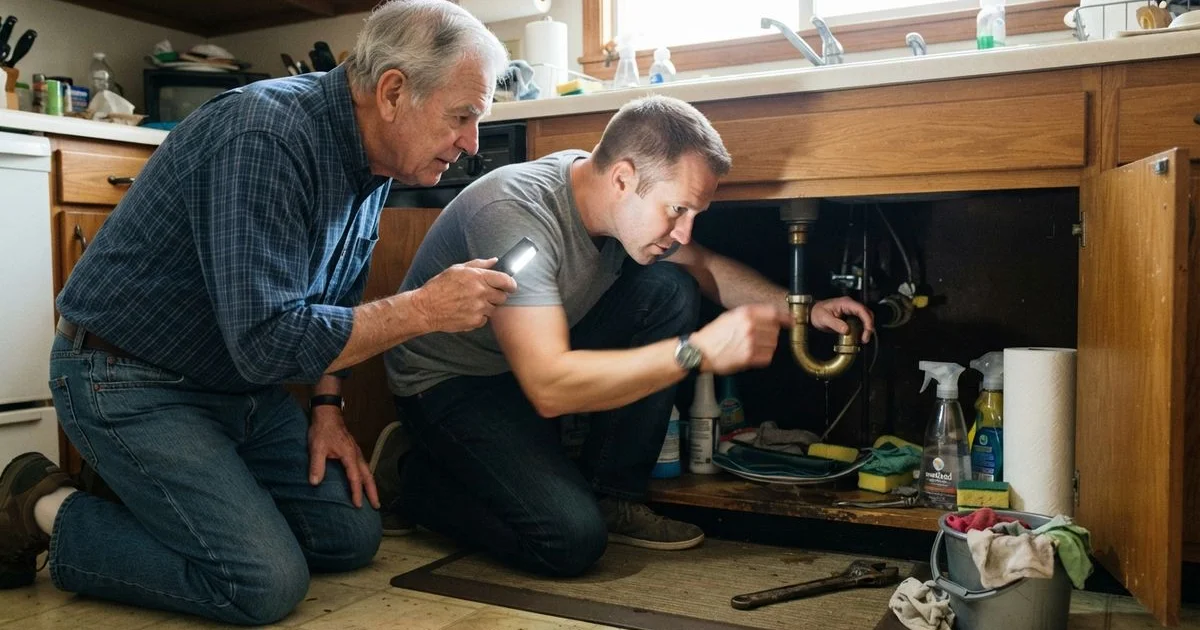
Helping an aging parent with their home often starts with the visible things, stairs, lighting, grab bars, and plumbing gets overlooked because it mostly works quietly in the background. But a few plumbing-specific checks are worth doing, both for safety and to avoid a parent dealing with an emergency repair alone.
Start with water heater temperature
This is one of the simplest and most overlooked safety items. A water heater set too high, sometimes from years of incremental adjustments or a default setting that was never checked, creates real scalding risk, and older adults are more vulnerable to burns and slower to react to water that’s too hot. Checking and adjusting the thermostat, generally to around 120 degrees Fahrenheit, is a quick fix with a real safety benefit.
Make sure the main shutoff is actually accessible
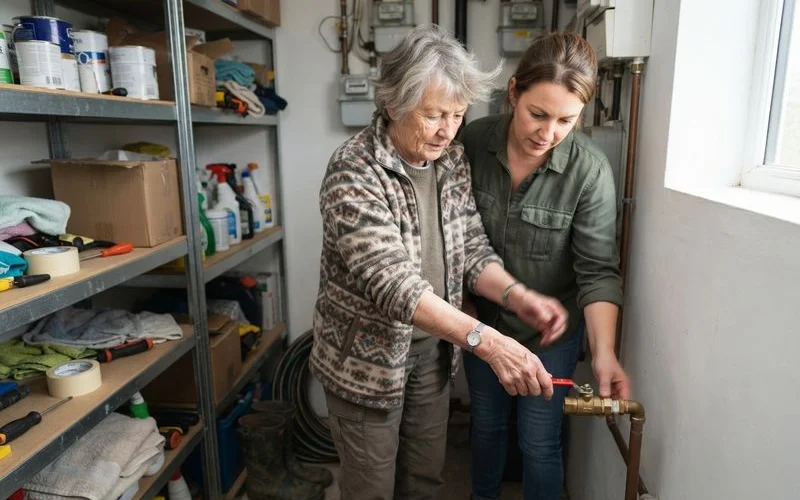
Knowing where a shutoff valve is matters less if a parent physically can’t reach or turn it during an emergency. If it’s in a hard-to-access crawlspace, behind stored items, or requires more strength than they have to operate, that’s worth addressing before it’s needed, either by clearing access or having a plumber install something easier to reach.
What to check during a visit
| Area | What to look for | Why it matters |
|---|---|---|
| Water heater temperature setting | Confirm it’s not set unusually hot | Reduces scalding risk |
| Main shutoff valve | Confirm location and that it can be reached and turned | Critical in any leak or burst pipe scenario |
| Under sinks and around the water heater | Any signs of slow leaks, staining, or corrosion | Small leaks often go unnoticed until they become bigger problems |
| Water pressure and drainage | Unusually low pressure or slow drains | Can signal an aging system that’s starting to fail |
| Outdoor spigots and hoses, especially before winter | Left connected or undrained heading into cold weather | A common source of frozen pipe damage in older homes |
A few things that help beyond the checklist
Consider having a trusted plumber’s contact information posted somewhere visible, like on the refrigerator or by the phone, rather than assuming a parent will search for one during a stressful moment. If your parent lives alone, it’s also worth discussing what a plumbing emergency would actually look like for them: could they hear water running in another part of the house, would they know to shut off the water before calling for help, and do they feel comfortable doing so physically.
It also helps to walk through this together rather than doing it for them. A parent who’s seen the shutoff valve turned once, and understands why, is far more likely to use it correctly under pressure than one who was simply told where it is. The same goes for the water heater thermostat and any fixture-level shutoffs. A short, calm walkthrough now is worth far more than a rushed phone explanation during an actual leak.
If mobility is a concern, it’s also worth asking a plumber about lever-style handles instead of round knobs on shutoff valves and faucets, since they’re easier to operate with limited grip strength or arthritis. This is a small, inexpensive change that can make a real difference during an emergency.
For a home your parent has lived in for decades, a general plumbing check, covering water heater condition, visible pipe condition, and shutoff accessibility, is a reasonable one-time step rather than waiting for something to fail. It’s a smaller, calmer version of an inspection than dealing with an emergency call later.
Our scoring methodology explains how we evaluate patience and clear communication across the plumbers listed on the home page, which matters here since a good plumber working with an older homeowner should take the time to explain things clearly, not rush through the visit.
If cost is part of what’s holding a parent back from calling, senior discounts and low-cost plumbing help in Aiken rounds up ways to make that more affordable.
Questions people ask
- What plumbing issue is most worth checking in an older parent's home?
- Water heater temperature is a good place to start. A unit set too hot creates a real scalding risk, which matters more for older adults with slower reflexes or reduced sensitivity to heat. It's a simple thing to check and adjust.
- How do I know if their home's plumbing is genuinely aging out versus just old?
- Recurring issues, like more than one pipe failure in different spots within a year or two, or persistently low water pressure, are signs worth having a plumber assess rather than treating each incident separately.
- Should I worry about them living alone if a pipe bursts?
- It's a reasonable concern, since knowing where the main shutoff is and being physically able to reach and turn it matters more here than in a typical household. If reaching it is difficult, a plumber can sometimes relocate or add an accessible shutoff.
- Is it worth getting their whole plumbing system inspected proactively?
- For a home over 30-40 years old, particularly one your parent has lived in for decades, a general check covering the water heater, visible pipe condition, and main shutoff accessibility is a reasonable, low-cost step rather than waiting for something to fail.