
Emergency plumbing: what to do in the first 10 minutes before help arrives
By Sofia Tan · Updated 2026-06-02
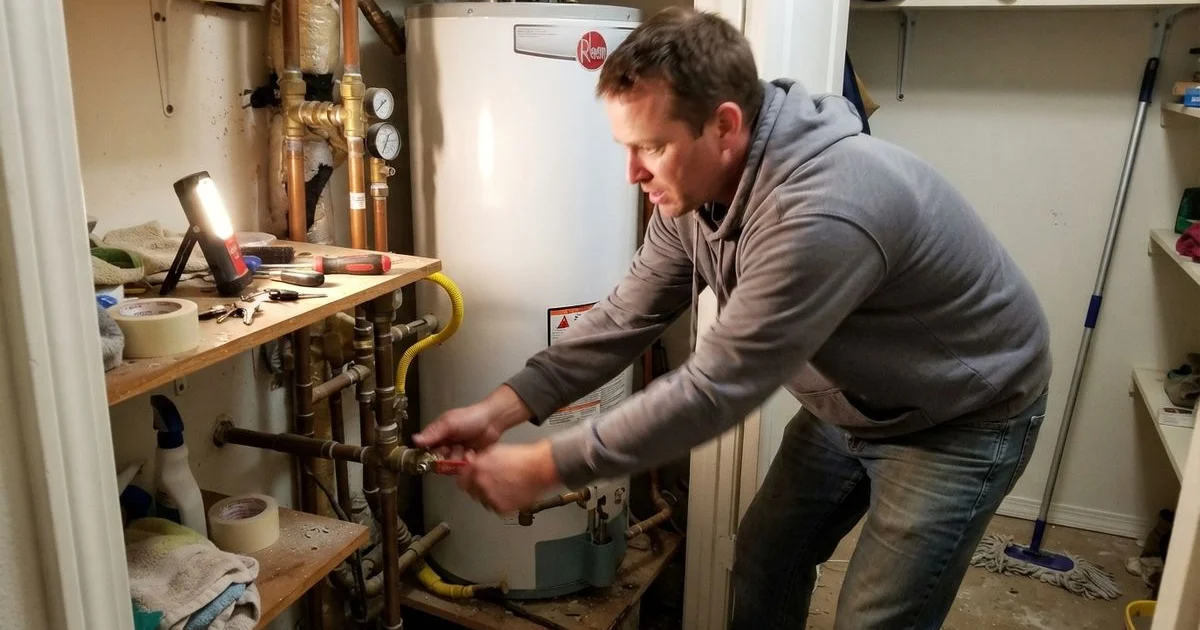
Plumbing emergencies rarely give warning. A supply line lets go behind the washing machine, a toilet won’t stop running over, or water starts backing up out of a floor drain, and now you’re standing in it wondering what to do first. What happens in the next ten minutes decides whether you’re dealing with a repair or a repair plus a flooring and drywall bill.
Shut off the water first, not last
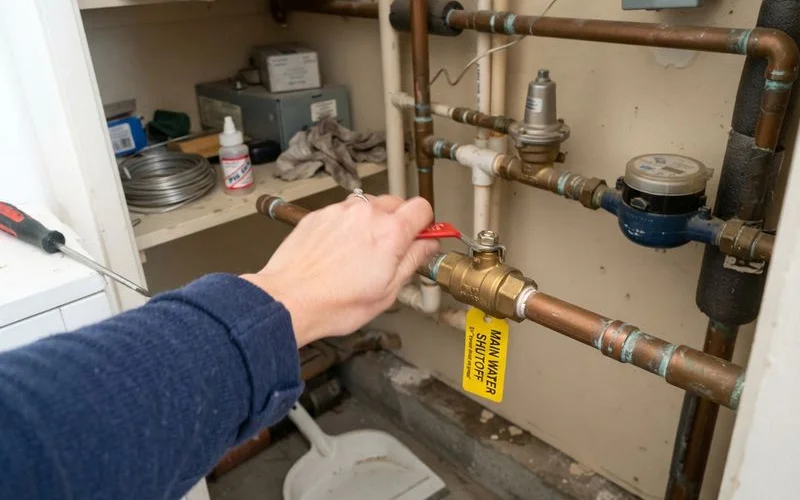
The single most useful thing you can do before anyone arrives is stop water from moving. If you know which fixture is failing, its local shutoff valve, usually a small oval or lever handle on the supply line, will isolate it in seconds. If the source isn’t obvious, if it’s a burst pipe inside a wall, or if water is rising faster than you can track, go to the home’s main shutoff instead. Turning that one valve stops everything at once.
Aiken and North Augusta homes vary on where this lives: some have it near the water meter at the curb, others in a crawlspace access panel or a utility closet. If you’ve never located yours, do it today, before you need it in the dark with the floor wet.
Match your response to what’s actually happening
Not every plumbing emergency calls for the same first move. A dripping faucet and a burst supply line are both urgent to you, but they don’t carry the same risk.
| Situation | First move | Why |
|---|---|---|
| Burst or badly leaking pipe | Shut off the main water valve immediately | Stops the flood at the source instead of one fixture |
| No water anywhere in the house | Check if a neighbor also has none (utility issue) before assuming it’s your plumbing | Saves an unnecessary emergency call-out fee |
| Sewage backing up from a drain or toilet | Stop using all drains and toilets, keep people and pets clear | Backups often mean a main line problem; using other fixtures can make it worse |
| Gas smell near a water heater or line | Leave the area, don’t flip switches, call the gas utility’s emergency line, then a plumber | Gas issues are a different hazard than water and need utility involvement first |
| Water heater leaking from the bottom | Shut off the water supply to the unit and the power or gas to it if safely reachable | Limits water loss and reduces fire or shock risk near the unit |
What to say when you call
Whoever answers the phone can dispatch faster and prepare the right parts if you give them a clear picture up front: whether the water is currently shut off, roughly how long it’s been running, what part of the house it’s coming from, and whether it’s affecting flooring, ceilings below, or an electrical panel. If it’s genuinely urgent, say so plainly rather than describing it as routine.
Local providers listed in the directory’s emergency plumbing category generally note their response windows and after-hours availability, which is worth checking before you’re mid-crisis rather than during one.
A quick note on terminology: the local shutoff valve under a fixture handles a single leak, while a burst pipe or anything you can’t isolate calls for the main shutoff instead.
While you wait
Once the water’s off, there’s not much else to do that helps and plenty that can hurt. Don’t try to cut into drywall to “see how bad it is.” Don’t run a wet vac through sewage. Do move anything valuable off the floor, prop up furniture legs on blocks if water is pooling, and take a few photos for insurance before you start any cleanup. If the leak has been running for more than an hour or two, note that too. It matters for both the repair diagnosis and any claim you file later.
Small nonemergencies deserve a different pace. A slow drain or a toilet that runs a bit long after flushing isn’t worth an after-hours rate. Save the urgent call for situations where water, gas, or sewage is actively spreading and you can’t contain it yourself.
The bigger picture
Most of what makes an emergency call go smoothly happened before the emergency: knowing where your shutoff is, having a plumber’s number saved rather than searching for one one-handed, and not panicking into decisions that make cleanup harder. Our scoring methodology explains how we evaluate response speed and reliability across the providers on the home page, which is worth a look before you’re standing in an inch of water deciding who to call.
Cold snaps bring their own version of this crisis. The guide on preparing your pipes for a South Carolina cold snap covers how to keep a hard freeze from turning into exactly this kind of morning.
If you’re facing a repeat problem, like a drain that backs up every few months, that’s worth a conversation with a plumber about the underlying cause rather than treating each occurrence as its own emergency.
Questions people ask
- Should I turn off the water at the fixture or the main shutoff?
- For a single fixture like a toilet or sink, the local shutoff valve under it is usually enough. For a burst pipe, a slab leak, or anything you can't isolate quickly, go straight to the main shutoff so you're not standing in rising water trying to find a small valve.
- Is it safe to use a wet vac or mop up sewage backup myself?
- Not for a sewage backup. Wastewater carries bacteria that plain cleaning doesn't handle safely. Keep people and pets away from the area and let a plumber or a cleanup crew assess it before you touch it.
- What if I can't find my main water shutoff valve?
- Common spots are near the water meter, in a basement or crawlspace access point, or along an exterior wall closest to the street. If you genuinely can't locate it during an active leak, call for emergency help right away and mention that on the phone so they come prepared.
- Do I need to turn off electricity too?
- If water is pooling near outlets, a water heater, or any electrical panel, switch off power to that area at the breaker if you can reach it safely. If reaching the breaker means walking through standing water, don't. Wait for help.