
Preparing your pipes for a South Carolina cold snap
By Sofia Tan · Updated 2026-06-25
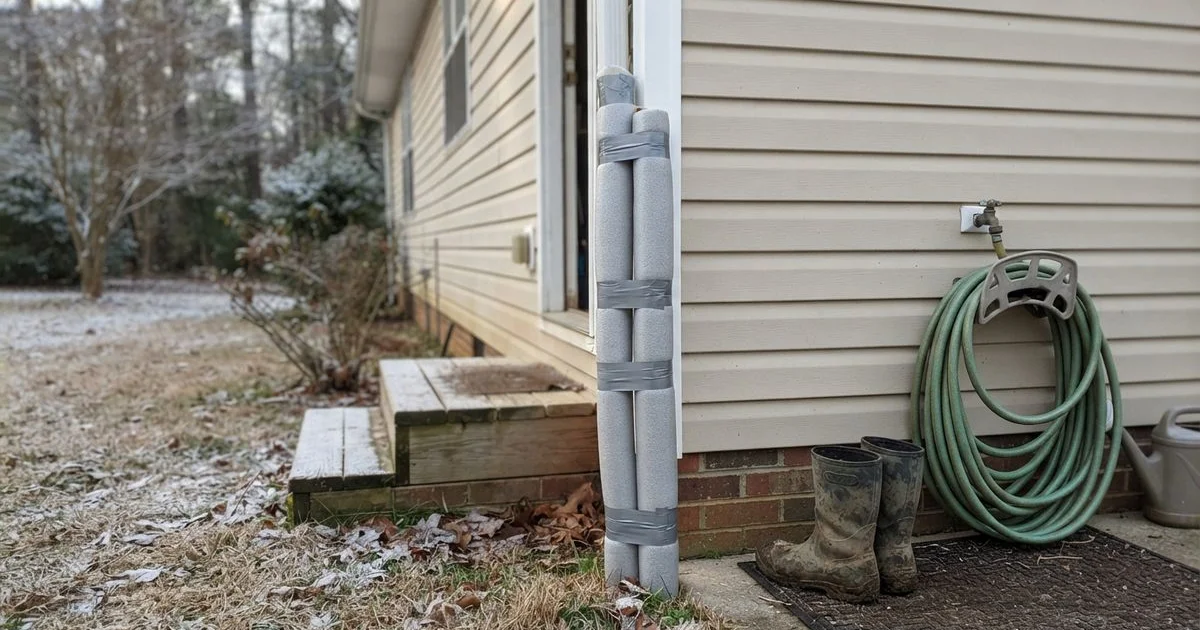
South Carolina doesn’t get sustained hard freezes most winters, and that’s exactly what makes the occasional cold snap dangerous for local plumbing. Homes here aren’t built the way homes in colder climates are, with pipes often running through less-insulated crawlspaces, exterior walls, or unheated garages, because it’s usually not necessary. When a real freeze does hit, that gap shows up fast.
Why this matters more here than it seems
A pipe that would be perfectly safe in a northern home, buried deep and heavily insulated, might be exposed in a crawlspace or an exterior wall in an Aiken-area home built for a milder climate. It’s not that local homes are poorly built, it’s that they’re built for the climate they usually get. The problem shows up during the handful of days a year when temperatures drop well below normal, and it catches people off guard because it’s rare enough to forget about between cold snaps.
Before the cold snap hits
A little preparation goes a long way, and none of it requires a plumber unless you find an existing problem while doing it.
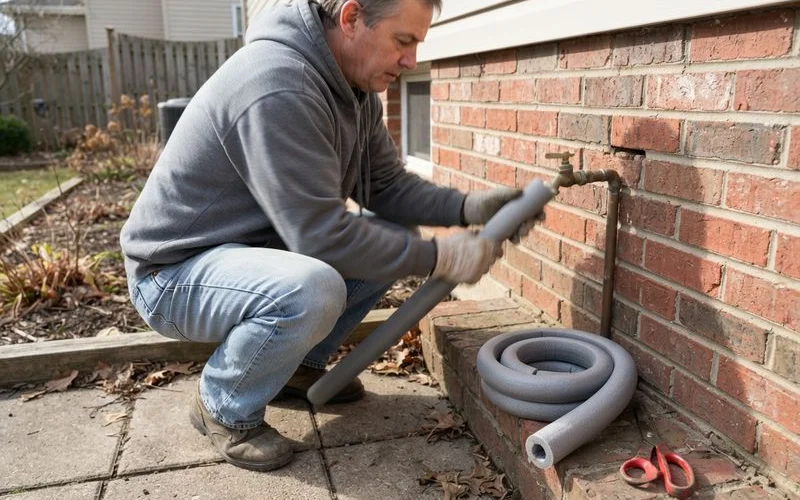
- Locate and insulate exposed pipes. Check crawlspaces, exterior walls, and unheated garages for any visible pipe. Foam pipe sleeves are inexpensive and take an afternoon to install.
- Disconnect and drain outdoor hoses. A hose left attached can trap water in the spigot itself, and that trapped water is one of the more common freeze points.
- Know where your main shutoff is. If a pipe does freeze and crack, you’ll want to stop water flow immediately once it thaws, not search for the valve while water is spreading.
- Seal obvious drafts near pipe runs, like gaps around crawlspace vents or where pipes pass through exterior walls.
During the cold snap itself
| Action | When to do it | Why |
|---|---|---|
| Let vulnerable faucets drip slightly | Overnight during hard freeze warnings | Moving water resists freezing better than still water |
| Open cabinet doors under sinks | During cold snaps | Lets warm household air reach pipes on exterior-facing walls |
| Keep the thermostat steady, even away | Whenever a freeze is forecast | A home that dips too cold overnight is a common cause of frozen pipes while owners are traveling |
| Check crawlspace vents are closed | Before the cold arrives | Open vents let freezing air reach pipes directly |
If you’re traveling during a cold snap
Leaving town during a hard freeze warning adds risk, since nobody’s there to notice a small leak or a thermostat that’s drifted too low. If you can’t avoid traveling, ask a neighbor to check on the house periodically, keep the thermostat set no lower than the mid-60s Fahrenheit rather than turning heat off entirely, and consider shutting off the main water supply if you’ll be gone for an extended period and the home will sit unheated or under-heated. A shut-off, drained system can’t burst from freezing, even if the temperature inside drops further than planned.
If a pipe freezes anyway
A frozen pipe that hasn’t cracked is a manageable problem. Shut off water to that section if you can, then warm it gradually from the faucet end inward, using a hair dryer, a space heater held at a safe distance, or warm towels. Never use an open flame, and never assume a frozen pipe is fine just because water eventually flows again. Ice expansion can crack a pipe invisibly, and the crack often only becomes obvious once everything thaws and water starts leaking or spraying. If it does crack, the first ten minutes matter as much as anything a plumber does after; see what to do in the first 10 minutes of a plumbing emergency for the shutoff and cleanup steps.
If you’re not sure whether a pipe has already failed, or if you’re dealing with multiple frozen sections at once, that’s a reasonable moment to call for help rather than troubleshoot alone. Our scoring methodology explains how we evaluate response time for local providers, which matters most during a widespread cold snap when demand for plumbers spikes all at once. You can review the full list of scored providers from the home page before the next freeze warning goes out, not during it.
Questions people ask
- How cold does it actually need to get for pipes to freeze?
- Pipe freezing risk generally starts once outdoor temperatures drop into the mid-20s Fahrenheit or lower for an extended period, especially overnight. Uninsulated pipes in unheated spaces are at risk even at temperatures that wouldn't concern a well-insulated home further north.
- Why are homes in this area more vulnerable than homes in colder states?
- Homes built for a mild climate often don't insulate pipes as heavily, since hard freezes are infrequent. When a genuine cold snap hits, pipes that would be fine in a typical winter here are more exposed than an equivalent pipe in a northern home built with harder freezes in mind.
- Does leaving a faucet dripping really help?
- Yes, for pipes at risk. A small continuous drip keeps water moving, which makes freezing significantly less likely, and it relieves pressure if ice does start to form somewhere in the line.
- What should I do first if a pipe already froze but hasn't burst?
- Shut off the water supply to that line if you can, then apply gentle heat, like a hair dryer on low or warm towels, starting from the end nearest the faucet. Never use an open flame. If you can't tell whether it's already cracked, treat it cautiously and call a plumber rather than risk a sudden burst once it thaws.